
Most budgets fail for the same reason diets fail: they are designed for an imaginary person who never gets tired or hungry or invited out. This guide builds a budget for the person you actually are. It takes one honest hour to set up and about ten minutes a week to keep.
Before any planning, spend twenty minutes finding facts: your take-home income, and the last two months of actual spending from your bank app or statement. Not what you think you spend - what the statement says. Most people find one surprise here (subscriptions are the usual suspect), and that surprise pays for the whole exercise.
Split spending into five or six buckets you recognise: rent and bills, groceries, eating out and fun, travel, everything else. Do not make seventeen categories. Five you remember beat seventeen you abandon.
Take your monthly take-home and assign it: needs first (rent, bills, groceries), then savings, then wants, and keep a small buffer for the unexpected. A classic starting split is 50% needs, 30% wants, 20% savings - treat it as a compass, not a law. If rent alone eats 45%, your split will look different and that is fine; the point is that the numbers add up to your income, with nothing left unassigned.
A worked example on a 60,000 take-home: 27,000 rent and bills, 9,000 groceries, 6,000 travel, 6,000 eating out and fun, 9,000 savings, 3,000 buffer. That is 60,000 assigned. When the buffer survives the month, it joins savings.
The single highest-impact habit: move your savings amount out on the day income arrives, before spending begins. Willpower at the end of the month loses to a discount code every time. An automatic transfer to a separate account turns saving into a bill you owe yourself.
Daily logging is where budgets go to die. Instead, keep one weekly ten-minute appointment - Sunday evening works - and log the week's spending into your sheet in one sitting. Compare each bucket against its limit. Over on fun but under on groceries? Move the difference and move on. A budget is a steering wheel, not a report card.
This weekly rhythm is exactly what our budget templates are built around: you log rows, the dashboard shows each bucket against its limit, and the leftover number updates itself.
Festival season, a wedding, a medical bill - some months break the plan. The rule that saves the habit: never quit twice. One blown month is data; adjust next month's limits using what you learned. Two blown months is a signal your limits were fantasy. Rewrite them kinder and continue.
And if your pay arrives every two weeks rather than monthly, budget per pay period instead of per month - the same method, sliced to match your cash flow.
A starting guideline: 50% of take-home for needs, 30% for wants, 20% for savings. Use it to sanity-check your plan, then adjust to your real rent and city.
Whichever you will open weekly. Apps automate imports; spreadsheets are free, private and flexible. Many people export their bank statement and log weekly in a sheet - ten minutes, full control.
Start with what is genuinely sustainable - even 10% - and raise it after two calm months. A saved habit beats an ambitious number abandoned.
a monthly budget that does the maths for you · the simple monthly budget · a bi-weekly budget worksheet · budget percentages for each category
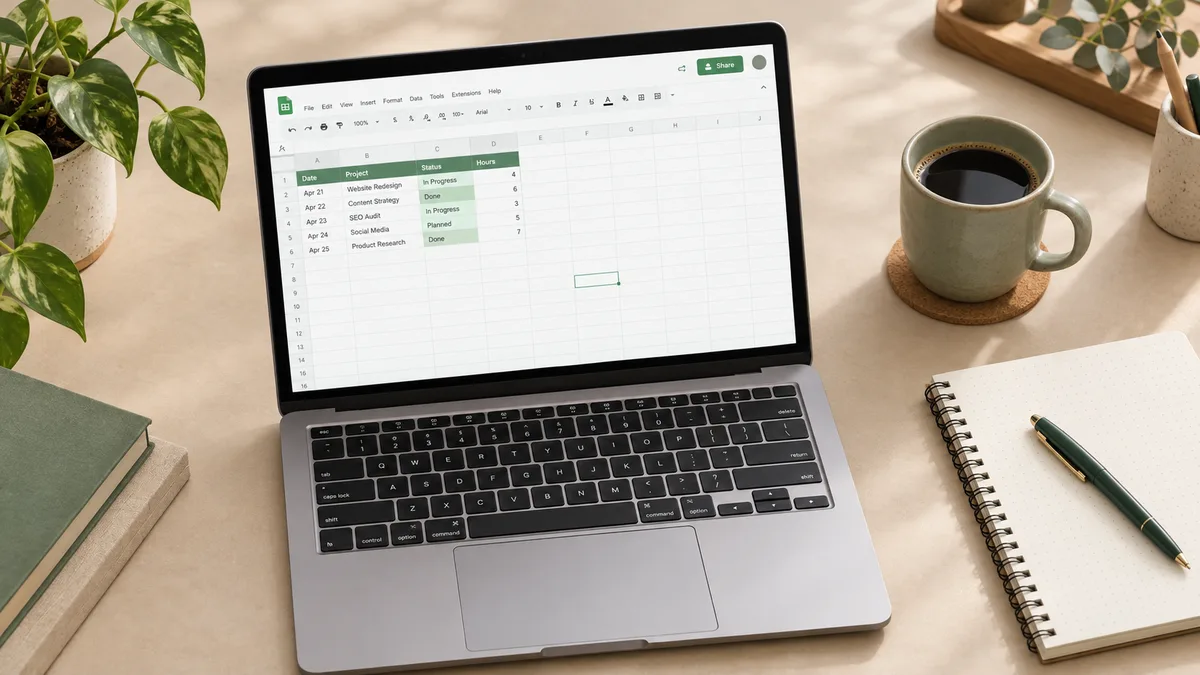
How to use Google Sheets from zero: cells, formulas, formatting and sharing, explained with small real examples. No jargon, no prior Excel needed.
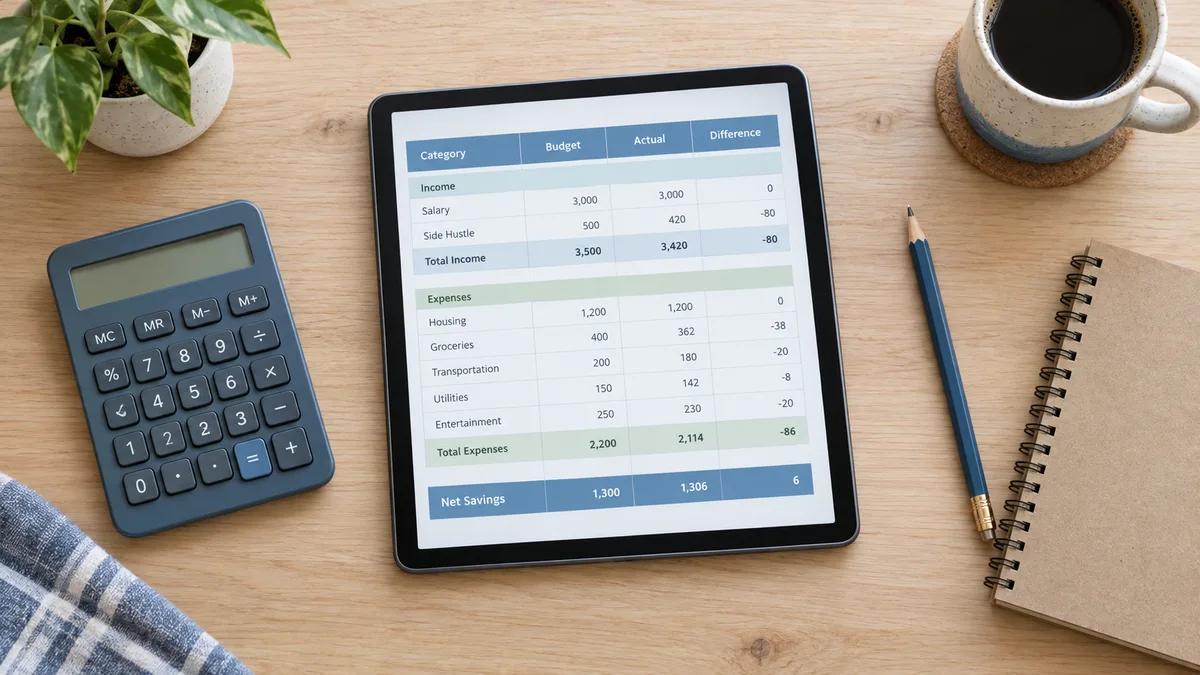
How to make a spreadsheet from a blank grid: plan the columns, add formulas, format it clean, and turn it into a reusable template. A 15-minute build.