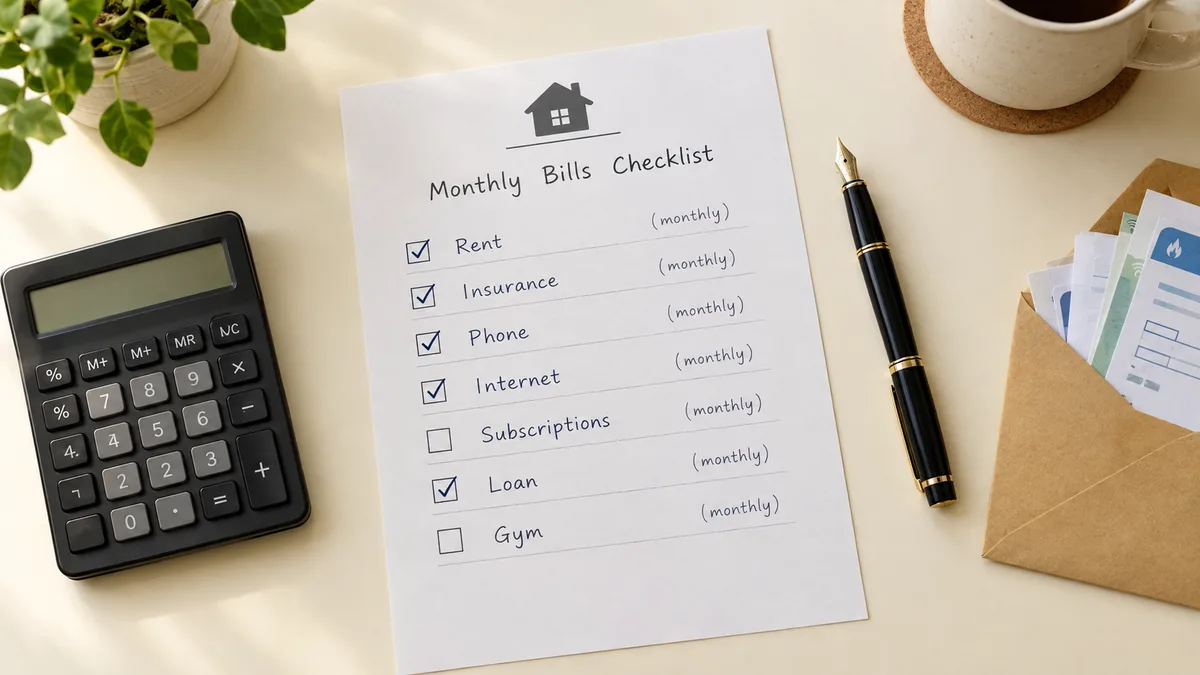
Every budget starts with the same question: what HAS to go out, every month, whether I pay attention or not? Those are your fixed expenses, and writing them down is the fastest win in all of budgeting - it takes twenty minutes and instantly shows you the floor of your spending. This guide gives you the complete list, grouped so nothing gets forgotten, plus the fixed vs variable distinction and three ways to shrink the list once you can see it.
A fixed expense is a cost that recurs on a schedule and stays the same (or nearly the same) each time. Rent is the classic example: same amount, same date, every month. The test is simple - if you could set up an autopay for it and the amount would be right almost every month, it is fixed.
Fixed expenses are the floor of your budget. Add them up and you know the minimum your income must cover before groceries, fun or savings enter the picture. That number is more useful than any percentage rule, because it is yours.
Rent or mortgage payment. Property tax (often monthly into escrow, or a sinking fund if paid annually). Home or renters insurance. HOA or society maintenance fees. Fixed utility plans where the amount is set - some internet and mobile plans, and budget-billing plans that average your electricity or gas across the year.
Note the edge case: electricity, water and gas are usually VARIABLE - they recur monthly but the amount moves with usage. They belong in your budget either way; they just are not fixed in the strict sense. If your provider offers equal monthly billing, that converts them into fixed.
Health insurance premiums. Dental and vision premiums. Life insurance. Car insurance (monthly or divided by six). Pet insurance. Prescription medications on a repeating schedule. Childcare or school fees that bill monthly. Regular loan payments: car loan, student loan, personal loan - the minimum payment is a fixed expense even though paying extra is smart.
Family budgets add a few more: monthly school lunch plans, activity fees billed monthly (swimming, music lessons), and any care arrangements with a standing weekly or monthly rate.
This is the category that grows when nobody looks: streaming services, music, cloud storage, software subscriptions, gym membership, news and app subscriptions, meal-kit or delivery memberships, phone plan, internet plan, and the annual ones hiding in disguise - divide any yearly fee (domains, memberships, Amazon Prime-style plans) by twelve and list it as a monthly fixed cost.
A quick way to find them all: open your last two bank and card statements and search for recurring charges. Anything that appeared both months at the same amount goes on the list. Most people find two or three they had forgotten they were paying.
Fixed: same amount, same schedule - rent, insurance premiums, loan minimums, subscriptions, phone plan, gym, childcare fees. Variable: recurs but the amount moves - groceries, electricity, fuel, eating out, entertainment. Irregular: does not recur monthly but WILL arrive - car service, gifts, school terms, annual insurance (handle these with small monthly sinking funds, as our family budget guide explains).
The sort matters because each type gets a different treatment: fixed expenses are trimmed by decisions (cancel, downgrade, refinance), variable expenses are trimmed by habits, and irregular ones are tamed by sinking funds. Mixing them up is why budgets feel unpredictable.
Write every fixed expense in a column with its monthly amount. Total it. That total divided by your take-home pay is your fixed-expense ratio - the share of income already spoken for before the month begins. If it is under 50%, your budget has room to breathe. If it is over 65%, the problem is not your coffee habit - it is the list itself, and that points you to the real levers: housing, car, insurance and subscriptions.
From here the rest of the budget is straightforward: savings first (pay yourself before the variables), then realistic amounts for the variable categories, using last month’s real numbers. Our budget percentages guide has the full method.
Cancel: anything on the subscription list you would not re-buy today goes. Do it during the same sitting - cancellation emails take two minutes each.
Renegotiate or shop around: insurance and internet plans reward an annual comparison. One phone call a year per provider is the going rate, and it routinely saves more per hour than any side hustle.
Restructure: refinancing a loan, moving to a cheaper plan tier, or annualising a subscription (one payment instead of twelve) all lower the monthly floor permanently. Fixed expenses are hard to change - which is exactly why changing one pays you back every single month afterwards.
Rent or mortgage, insurance premiums, loan minimum payments, phone and internet plans, subscriptions (streaming, gym, software), childcare or school fees billed monthly, and annual fees divided by twelve. The test: same amount, same schedule, every billing cycle.
Fixed expenses stay the same amount each cycle (rent, subscriptions, insurance). Variable expenses recur but the amount changes with use (groceries, electricity, fuel, eating out). Fixed costs are cut by decisions like cancelling or refinancing; variable costs are cut by habits.
No. Groceries recur monthly but the amount varies with what you buy, so they are a variable expense. You still budget for them every month - just with an estimated amount rather than an exact one.
A common guideline is keeping fixed needs under about 50-60% of take-home pay. If your fixed list runs higher, the effective levers are structural: housing, transport, insurance and subscriptions, not daily spending.
Divide the yearly cost by twelve and treat that as a monthly line, moving it into a sinking fund each month. Car insurance paid twice a year, memberships and school fees all work this way - the big payment then pays for itself.
the budget spreadsheet that sorts fixed and variable for you · set the right split with our budget percentages guide · a budget for a family of 4 with sinking funds · how to budget money from zero
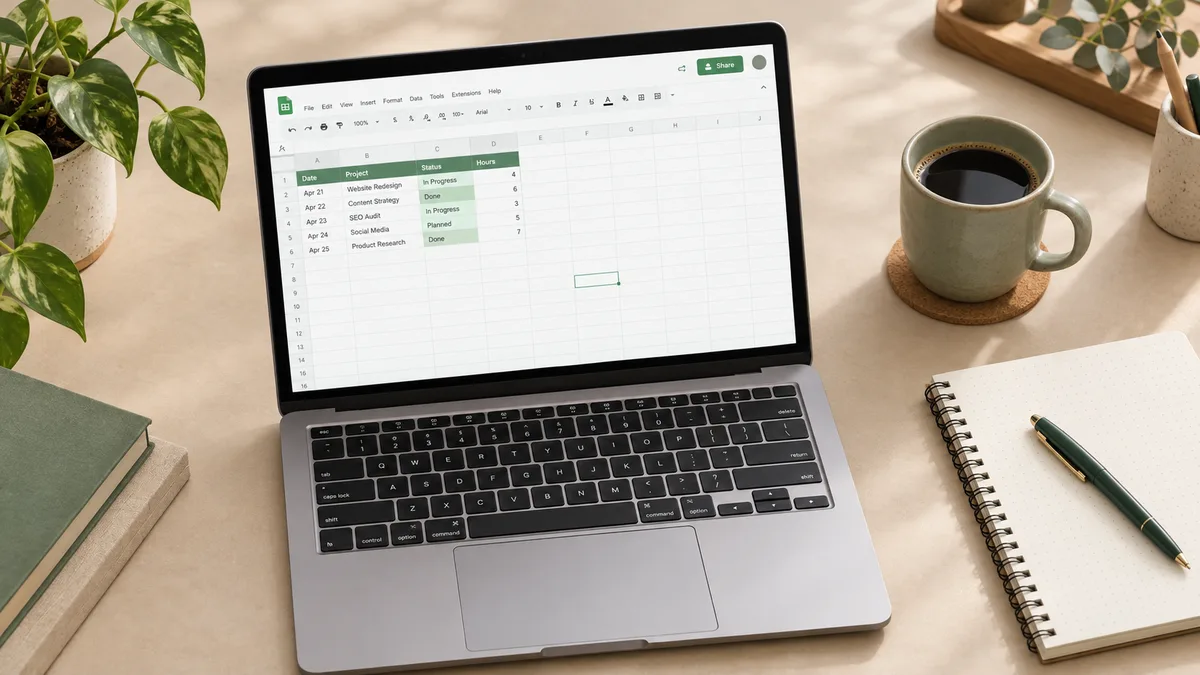
How to use Google Sheets from zero: cells, formulas, formatting and sharing, explained with small real examples. No jargon, no prior Excel needed.
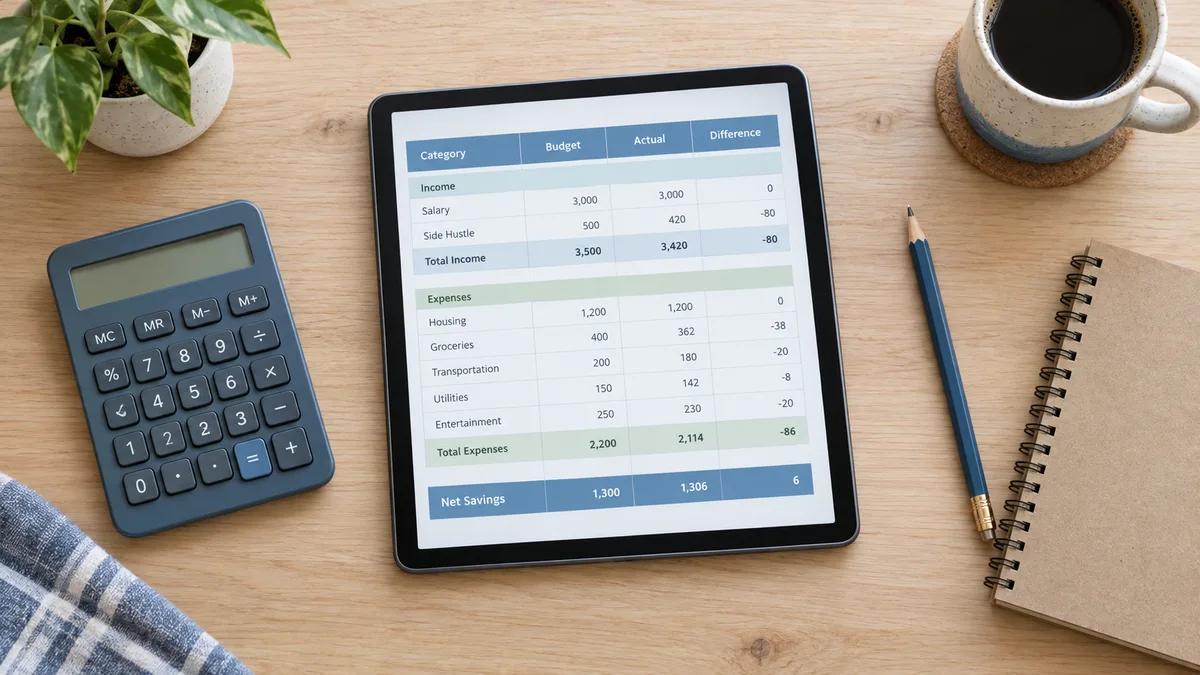
How to make a spreadsheet from a blank grid: plan the columns, add formulas, format it clean, and turn it into a reusable template. A 15-minute build.